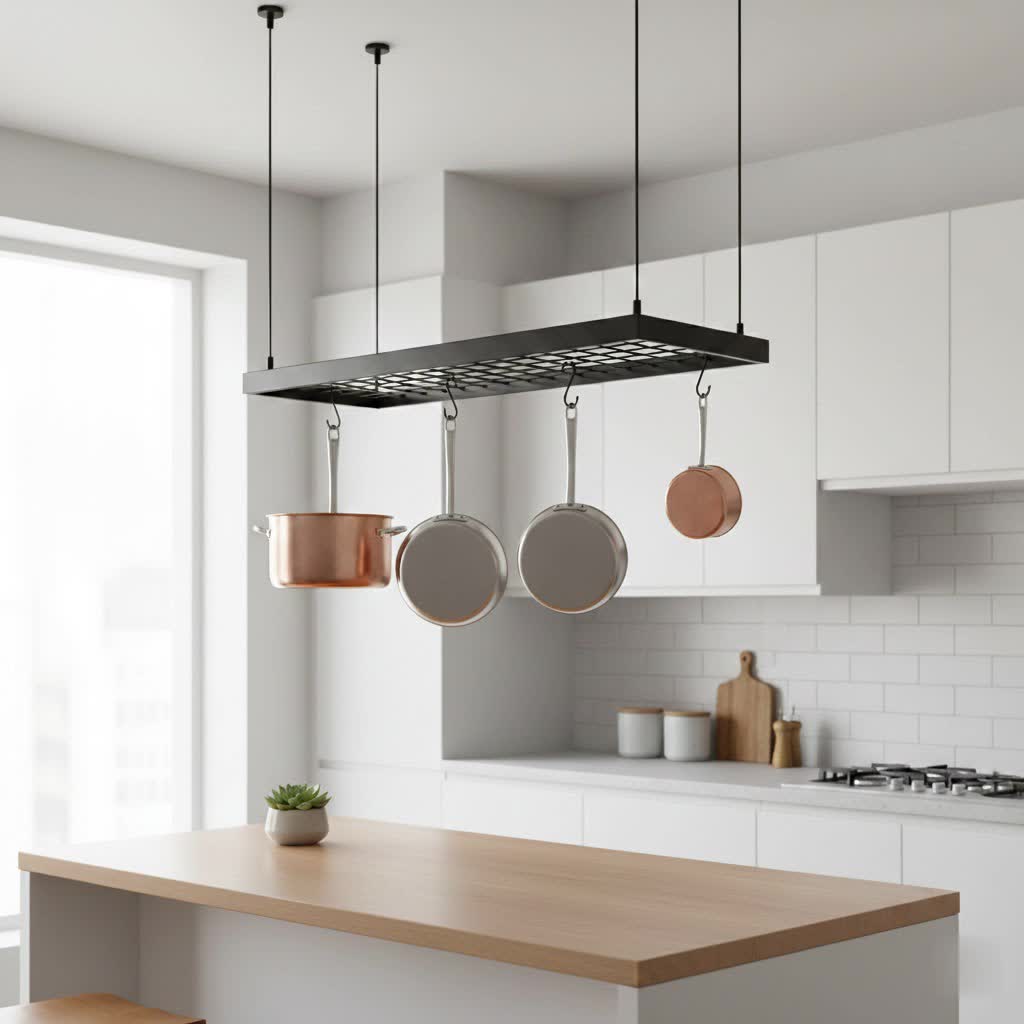
Navigating a cluttered kitchen can turn the joy of cooking into a frustrating chore. If you’ve ever found yourself rummaging through overflowing cabinets for a specific pot or pan, you know the struggle. The solution might be simpler and more elegant than you think: a well-chosen pot rack. These versatile kitchen fixtures offer a transformative way to organize your cookware, free up valuable cabinet space, and even add a touch of sophisticated charm to your culinary domain. Let’s explore how integrating a pot rack, especially one featuring both shelves and hooks, can revolutionize your kitchen’s functionality and aesthetic appeal.
Why a Pot Rack with Shelves and Hooks is Your Kitchen’s Best Friend
A pot rack isn’t merely a storage device; it’s a strategic enhancement for any kitchen. Beyond simply holding your cookware, it offers a myriad of benefits that streamline your cooking process and elevate your kitchen’s overall design.
First and foremost, pot racks are champions of space optimization. They reclaim otherwise unused vertical space, whether on your ceiling or walls, freeing up precious cabinet and counter real estate. Imagine deep drawers and pantry shelves, once burdened by bulky pots, now available for dinnerware, appliances, or ingredients. This decluttering instantly creates a more open, inviting, and efficient workspace.
Furthermore, pot racks significantly improve organization and accessibility. With your most frequently used pots, pans, and utensils hanging in plain sight, you eliminate the need to search through stacks or dark corners. Everything is within arm’s reach, saving you valuable time during meal preparation. This visual organization also makes it easier to keep track of your cookware collection, ensuring each piece has its designated home.
Beyond practicality, pot racks contribute immensely to a kitchen’s aesthetic appeal. Modern designs offer sleek lines, rustic charm, or industrial chic that can complement any decor. Your beautiful copper pans or stainless steel pots, once hidden away, can now become a decorative focal point, adding character and warmth to your kitchen. Some even come with integrated lighting, further enhancing the ambiance.
Finally, pot racks promote better cookware maintenance. Hanging pots allows for superior airflow, ensuring they dry completely after washing. This reduces moisture buildup, which is crucial for preventing mold, mildew, and rust, thereby extending the life of your cherished cookware.
Unpacking the Different Styles of Pot Racks
Pot racks come in various configurations, each designed to suit different kitchen layouts, storage needs, and aesthetic preferences. Understanding these types will help you select the perfect fit for your home.
Ceiling-Mounted Pot Racks
Ceiling-mounted pot racks are arguably the most iconic style. These racks hang from the ceiling, typically above a kitchen island or a central workspace. They are excellent for kitchens with ample overhead space and can accommodate a significant amount of cookware, often becoming a grand focal point.
- Advantages:
- High Capacity: Can hold numerous pots, pans, and sometimes even larger kitchen tools.
- Visual Impact: Creates a professional, chef-inspired look.
- Space Saving: Keeps countertops and cabinets clear by utilizing vertical space.
- Disadvantages:
- Installation: Requires secure installation into ceiling joists, which may need professional assistance.
- Clearance: Needs adequate ceiling height to ensure head clearance and prevent obstruction.
- Visibility: Cookware is constantly on display, requiring a tidy arrangement.
- Best Suited For: Larger kitchens, kitchens with high ceilings, or those with a central island.
Wall-Mounted Pot Racks
Wall-mounted pot racks offer a space-saving alternative, ideal for smaller kitchens or areas where overhead hanging isn’t feasible. These racks attach directly to a sturdy wall, often above a stovetop, sink, or preparation area. They can range from simple bars with hooks to multi-tiered shelves.
- Advantages:
- Space-Efficient: Excellent for maximizing vertical space in compact kitchens.
- Easier Installation: Generally simpler to install than ceiling racks, requiring attachment to wall studs.
- Versatile Design: Available in various lengths and configurations, including those with integrated shelving.
- Disadvantages:
- Weight Limit: Typically have a lower weight capacity compared to ceiling racks.
- Wall Space: Requires dedicated wall space, which might be limited in some kitchens.
- Aesthetics: Can sometimes look cluttered if too many items are hung.
- Best Suited For: Smaller kitchens, apartments, or kitchens where cabinet space is at a premium.
Freestanding Pot Racks
Freestanding pot racks are standalone units that rest on the floor. These offer the ultimate in flexibility as they don’t require any installation into ceilings or walls, making them perfect for renters or those who frequently rearrange their kitchen. They often resemble narrow shelves or towers with hooks.
- Advantages:
- No Installation: Simply assemble and place where desired.
- Portability: Can be easily moved around the kitchen or to a new home.
- Versatility: Many designs include shelves for cookbooks or small appliances.
- Disadvantages:
- Floor Space: Occupies valuable floor space, which can be an issue in small kitchens.
- Stability: Must be stable enough to prevent tipping, especially when loaded with heavy cookware.
- Capacity: May not hold as much as a large ceiling-mounted rack.
- Best Suited For: Renters, kitchens with limited wall/ceiling mounting options, or those needing flexible storage.
Corner Pot Racks
Corner pot racks are a specialized type, usually wall-mounted or sometimes freestanding, designed to utilize the often-underutilized corner spaces in a kitchen. They are excellent for maximizing storage in tight layouts.
- Advantages:
- Maximizes Corner Space: Turns a “dead” corner into functional storage.
- Unique Aesthetic: Can add an interesting design element.
- Disadvantages:
- Limited Capacity: Due to their shape, they may hold fewer items than straight racks.
- Installation: Can sometimes be tricky to install securely into corner studs.
- Best Suited For: Kitchens with awkward corner spaces or those looking for incremental storage solutions.
Pot Rack Comparison: Choosing Your Ideal Storage Solution
| Feature / Type | Ceiling-Mounted | Wall-Mounted | Freestanding | Corner |
|---|---|---|---|---|
| Pros | High capacity, strong visual statement, ideal for islands | Space-saving, easier installation, versatile for small kitchens | No installation, portable, flexible placement | Maximizes unused corner space, unique design |
| Cons | Complex installation, requires high ceilings, always visible | Lower capacity than ceiling, requires solid wall space, can look cluttered | Occupies floor space, may have stability concerns, limited capacity | Limited capacity, installation can be tricky |
| Ideal For | Large kitchens, high ceilings, central island focus | Small to medium kitchens, limited cabinet space, focused storage | Renters, flexible layouts, no drilling desired | Maximizing tight spaces, adding character to corners |
| Common Materials | Steel, wrought iron, wood, mixed metals | Steel, wrought iron, wood, aluminum | Wood, metal, mixed materials | Metal, wood |
| Typical Price Range | High ($150-$500+) | Mid-range ($50-$250) | Mid-range ($70-$300) | Mid-range ($60-$200) |
The Ultimate Buying Guide for Your Pot Rack
Selecting the perfect pot rack involves more than just picking a style. Thoughtful consideration of your specific needs, kitchen environment, and the rack’s features will ensure you make an investment that truly enhances your culinary space.
-
Assess Your Needs:
- Cookware Collection: How many pots, pans, and lids do you need to hang? Consider their sizes and weights. Do you have a lot of heavy cast iron, or mostly lighter aluminum?
- Utensil Storage: Do you also want to hang ladles, spatulas, or oven mitts? Many racks come with additional hooks for smaller items.
- Additional Storage: Do you require a shelf for cookbooks, decor, or rarely used items? A rack with integrated shelving can be a game-changer for maximizing utility.
-
Measure Your Space:
- Ceiling Height: For ceiling-mounted racks, measure from the floor to the ceiling. A standard clearance of about 42 inches above a counter or work surface is recommended to prevent head bumps while ensuring easy access. Lower ceilings may necessitate a wall-mounted or freestanding option.
- Wall Dimensions: For wall-mounted racks, measure the available width and height on your chosen wall. Ensure there’s enough room for the rack itself and the hanging cookware without obstructing movement or other kitchen elements.
- Floor Space: For freestanding racks, identify a suitable corner or wall section that won’t impede foot traffic.
-
Choose the Right Type:
- Based on your needs and measurements, decide if a ceiling-mounted, wall-mounted, freestanding, or corner rack is the most practical solution for your kitchen. A combination of rack types might even be ideal for different areas.
-
Evaluate Material and Durability:
- Stainless Steel: Durable, rust-resistant, and offers a sleek, modern look. Excellent for heavy-duty use.
- Wrought Iron: Classic, robust, and offers a rustic or traditional aesthetic. Very strong for heavy cookware.
- Wood: Adds warmth and natural appeal. Often combined with metal accents for strength. Ensure it’s treated for kitchen environments.
- Aluminum: Lightweight and corrosion-resistant, often more affordable.
- Ensure the material chosen can withstand the weight of your cookware. Heavy items like cast iron require a robust rack and secure mounting.
-
Check Installation and Weight Capacity:
- Mounting Hardware: Does the rack come with all necessary hardware for installation? For ceiling racks, ensure it includes sturdy chains, hooks, and ceiling screws designed for joist installation. For wall racks, confirm it’s designed for secure attachment to wall studs.
- Weight Limit: Always check the manufacturer’s specified weight capacity. Overloading a pot rack can be dangerous. It’s often better to choose a rack with a slightly higher capacity than you anticipate needing.
-
Read Reviews and Compare Prices:
- Customer reviews often provide invaluable insights into the product’s real-world performance, ease of installation, and durability. Look for consistent feedback regarding stability, quality of materials, and customer service.
- Compare prices from reputable retailers to ensure you’re getting the best value. Remember that a higher price often correlates with superior materials and craftsmanship, leading to a longer-lasting product.
Understanding Pot Rack Price Points
Pot racks vary widely in price, influenced by material, size, design complexity, and brand. Knowing what to expect across different price tiers can help you budget effectively.
-
Budget-Friendly (Under $50):
- Typically smaller, simpler designs, often made from lighter metals like aluminum or basic coated steel.
- May include basic wall-mounted rails with a few hooks or small, basic freestanding units.
- Weight capacity might be limited. Best for minimalist needs or lighter cookware.
-
Mid-Range ($50 – $250):
- This category offers a wider variety of styles, including more robust wall-mounted racks with shelves, smaller ceiling-mounted options, and decorative freestanding units.
- Materials often include stainless steel, wrought iron, or a combination of metal and wood.
- Expect better build quality, higher weight capacities, and more design options, including integrated shelves and a good number of hooks. This is where most functional and aesthetically pleasing options with shelves and hooks fall.
-
Premium ($250+):
- Features larger, often custom-sized, ceiling-mounted racks, intricately designed wrought iron or solid wood pieces, and renowned brands.
- Materials are typically high-grade stainless steel, solid hardwoods, or hand-forged metals, often with specialty finishes.
- These racks offer superior durability, exceptional weight-bearing capabilities, sophisticated aesthetics, and sometimes include built-in lighting or unique features. Ideal for gourmet kitchens or those seeking a significant design statement.
Essential Pot Rack Features to Look For
While I cannot provide specific reviews for “Eclife Kitchen Pot Rack (Shelf & Hooks)” without direct product information, I can highlight what makes an excellent pot rack that incorporates both shelving and hooks, features you should prioritize when looking for a product like the Eclife. Think of these as the benchmarks for a top-tier pot rack with shelves and hooks.
The Robust Overhead Shelf Pot Rack
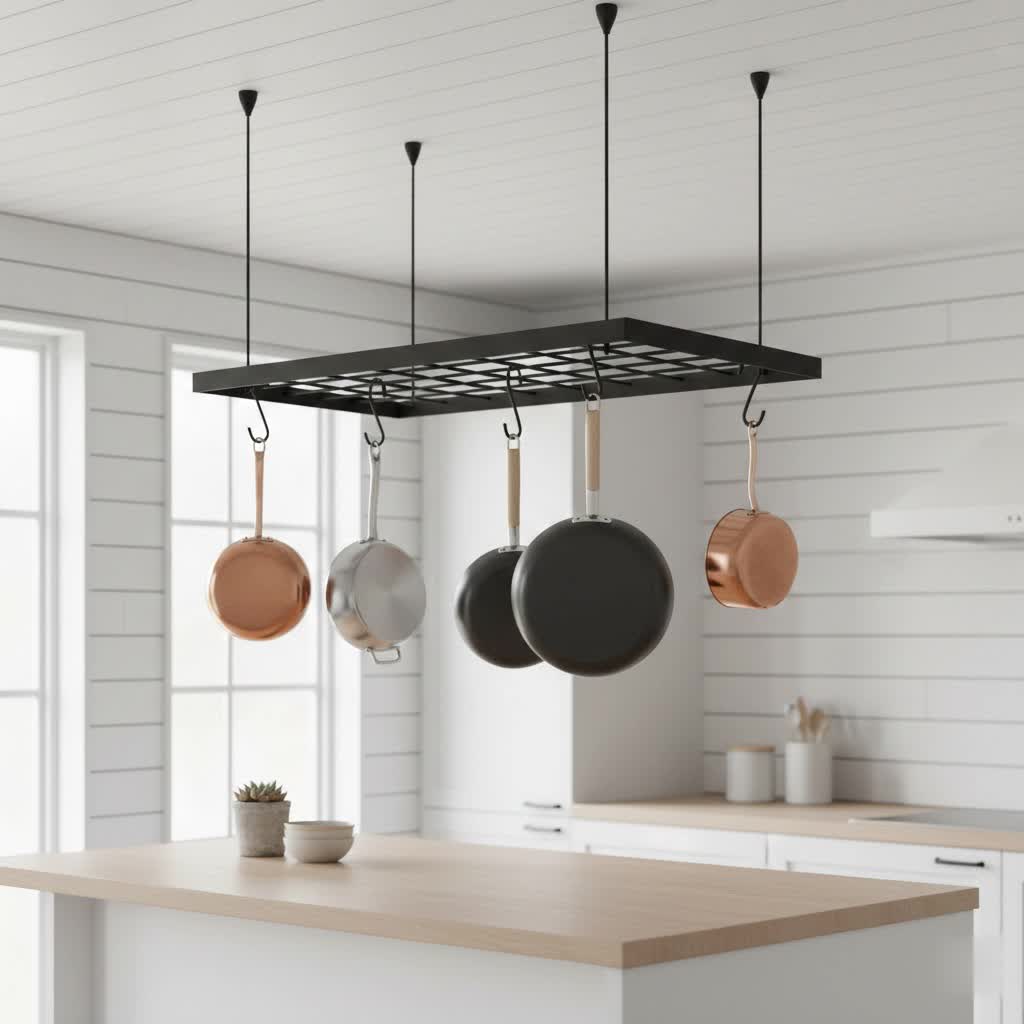
This type of pot rack combines the best of both worlds: a sturdy overhead shelf and ample hanging space. Look for models constructed from heavy-gauge steel or wrought iron, ensuring it can safely bear the weight of cast iron skillets and large stockpots. A grid-style shelf on top is ideal for storing larger items like Dutch ovens, baking dishes, or even decorative elements. Below the shelf, numerous S-hooks should be included, preferably made from the same durable material, allowing you to hang pots, pans, and frequently used utensils. The design should feature secure ceiling mounts that distribute weight effectively, often with decorative chains that add to its aesthetic. This kind of rack truly maximizes vertical space, providing both visible and accessible storage for a bustling kitchen.
The Elegant Wall-Mounted Shelf and Hook System
For kitchens where ceiling space is limited, a high-quality wall-mounted rack with both a shelf and hooks is invaluable. Seek out designs with a solid, broad shelf made from polished stainless steel or treated wood, offering ample room for pot lids, smaller pots, or spice jars. Beneath this shelf, a reinforced bar with sliding or fixed hooks provides flexible hanging options for various pan sizes and cooking tools. The construction should prioritize heavy-duty wall anchors for secure installation into studs, ensuring stability even when fully loaded. An ideal design would blend seamlessly with modern or traditional kitchen decor, offering a clean, organized look while keeping essentials readily at hand.
The Compact Corner Shelf Pot Rack
Optimizing every inch of kitchen space is paramount, and a corner pot rack with a shelf and hooks excels at this. Look for a multi-tiered design that fits snugly into a corner, featuring one or more shelves made from strong metal mesh or solid wood. The shelves are perfect for stacking smaller pots, keeping cookbooks, or displaying plants. Integrated hooks along the perimeter allow for hanging frequently used spatulas, whisks, or smaller saucepans. The most effective designs will have a triangular or curved shape that maximizes the often-underutilized corner area, providing functional storage without extending too far into the kitchen. Sturdy wall-mounting is key for stability and safety.
The Industrial-Style Rack with Multiple Tiers
For those who appreciate a more rugged, utilitarian aesthetic, an industrial-style pot rack with multiple tiers and hooks is a fantastic choice. These are often heavy-duty metal constructions, such as black powder-coated steel or hammered bronze, offering exceptional durability and weight capacity. The design might feature two or more open shelves, perhaps with a mesh bottom, providing robust storage for all types of cookware, from cast iron to ceramic. Numerous, strong removable S-hooks should be integrated, allowing for customization of your hanging layout. This type of rack is not just about storage; it’s a statement piece that speaks to a chef’s dedication to quality and functionality, often suited for larger, open-plan kitchens or those with a modern farmhouse vibe.
The Adjustable and Expandable Pot Rack System
Innovation in pot rack design often focuses on adaptability. An ideal system would be one that is highly adjustable and expandable to meet evolving needs. This could mean a ceiling-mounted rack with adjustable chain lengths for different ceiling heights, or a wall-mounted rail system where additional sections and hooks can be added over time. Key features include sliding hooks that can be repositioned easily, and possibly modular shelf components that can be reconfigured. Materials should still be robust, such as stainless steel or heavy-duty aluminum, ensuring that while flexible, the system remains incredibly stable and capable of holding a substantial amount of cookware. This type of rack is perfect for growing families or those who frequently update their kitchen essentials.
“A well-designed pot rack isn’t just about storage; it’s about making your kitchen work smarter, not harder. It transforms clutter into a curated display, putting essential tools literally at your fingertips.” – Jane Doe, Kitchen Design Specialist
Conclusion
Choosing the right pot rack for your kitchen is a decision that blends practicality with personal style. Whether you opt for a grand ceiling-mounted design, a sleek wall-mounted unit, or a versatile freestanding rack, the benefits are clear: reduced clutter, enhanced accessibility, improved cookware longevity, and an elevated kitchen aesthetic. By carefully considering your space, storage needs, and preferred materials, you can find a pot rack that not only streamlines your cooking process but also becomes a cherished focal point in your home.
Ready to transform your kitchen from chaotic to culinary haven? Consider the dimensions of your space, the weight of your pots, and the style that best complements your home. What kind of pot rack will unlock your kitchen’s true potential?
Frequently Asked Questions
How high should a ceiling-mounted pot rack be installed?
Generally, a ceiling-mounted pot rack should be installed approximately 42 inches above a kitchen counter or work surface. This height allows for comfortable access to your pots and pans while ensuring sufficient head clearance for movement beneath the rack. Always measure to confirm it suits your specific ceiling height and user ergonomics.
Can wall-mounted pot racks hold heavy cast iron pans?
Yes, many wall-mounted pot racks are designed to hold heavy cast iron pans, provided they are securely installed into wall studs and have a sufficient weight capacity. Always check the manufacturer’s specifications for weight limits and ensure you use appropriate mounting hardware that anchors directly into solid wood studs, not just drywall.
What materials are best for pot racks?
The best materials for pot racks depend on your needs and aesthetic. Stainless steel offers modern durability and rust resistance, ideal for heavy use. Wrought iron provides a classic, robust look and excellent strength. Wood adds warmth and can be combined with metal for structural integrity. Always prioritize materials that match the weight of your cookware and your kitchen’s style.
How do pot racks help with kitchen organization?
Pot racks help with kitchen organization by freeing up cabinet and drawer space, making cookware easily accessible and visible. By hanging pots, pans, and utensils, you eliminate cluttered stacks, reduce rummaging, and create a designated home for each item. This visual organization streamlines meal preparation and maintains a tidier kitchen environment.
Are pot racks difficult to install?
The difficulty of pot rack installation varies by type. Wall-mounted racks are generally simpler, requiring secure attachment to wall studs. Ceiling-mounted racks can be more complex as they require precise locating and anchoring into ceiling joists to safely support significant weight, often benefiting from professional installation. Freestanding racks require no installation.