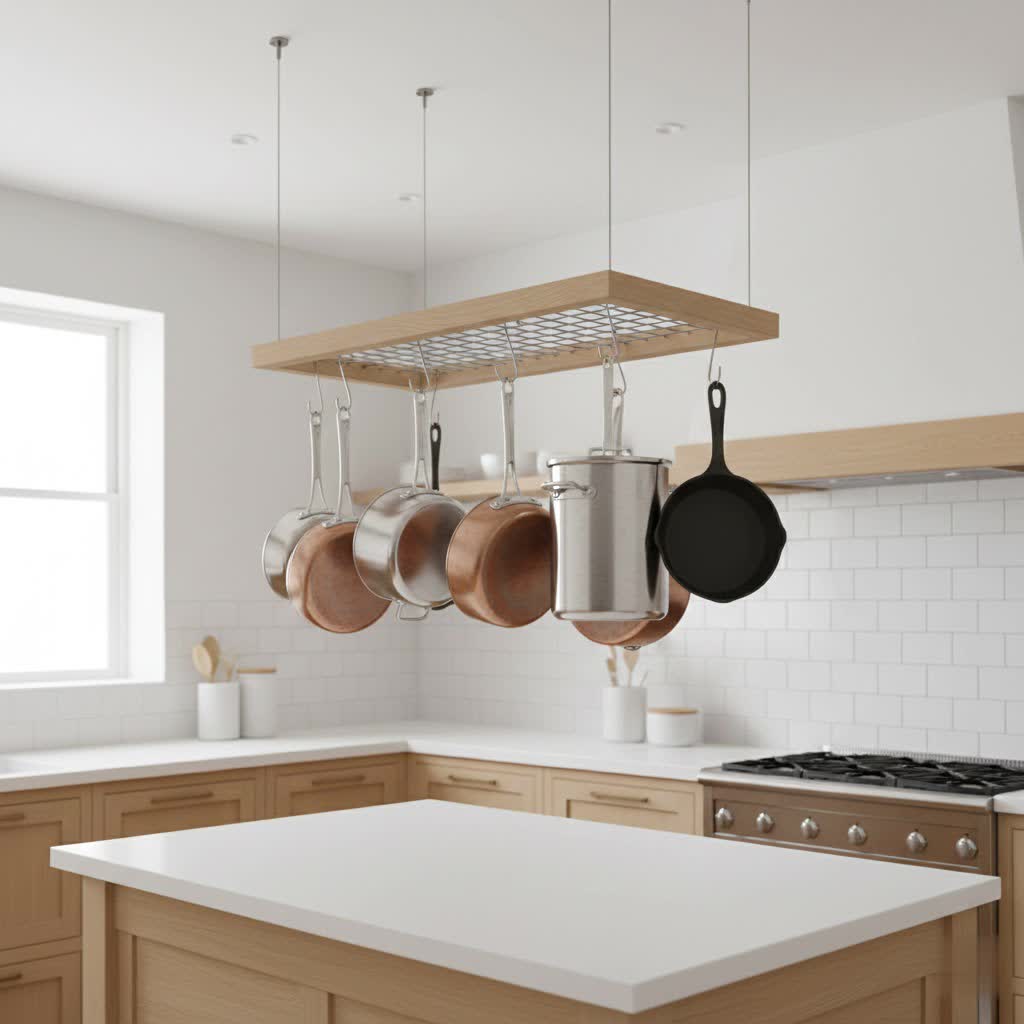
Do you find yourself wrestling with a mountain of pots and pans every time you open a cabinet? If your kitchen storage is a chaotic puzzle, a pot rack could be the elegant solution you’ve been searching for. Beyond simply clearing clutter, a well-chosen pot rack transforms your cooking space, making your essential cookware easily accessible and adding a touch of sophisticated charm. Let’s delve into everything you need to know to select the perfect pot rack for your home.
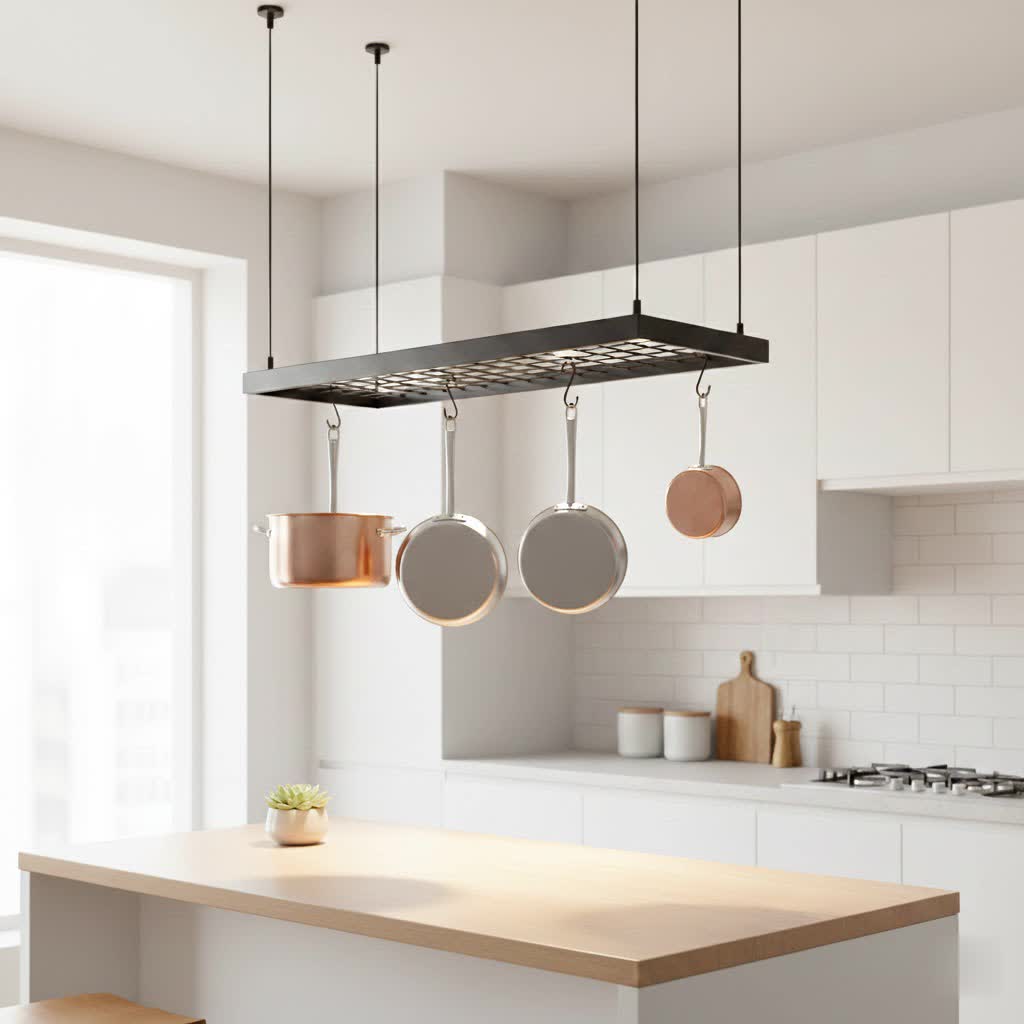
Why You Need a Pot Rack
Table is empty.A pot rack is more than just a storage accessory; it’s a strategic upgrade for any kitchen. First and foremost, it excels at freeing up valuable kitchen space. Instead of cramming pots into overflowing cabinets or stacking them precariously on countertops, a pot rack utilizes unused vertical space, instantly decluttering your work surfaces and making your kitchen feel more open and organized.
Beyond the practical benefits, pot racks significantly improve the organization of your cookware. Imagine being able to grab the exact pan you need without rummaging through a stack. With pots and pans neatly hung, finding and returning them becomes a seamless part of your cooking routine. This convenience speeds up meal prep and reduces kitchen frustration. Lastly, pot racks offer a unique opportunity to enhance your kitchen’s aesthetic appeal. Beautiful copper pans, gleaming stainless steel skillets, or even cherished cast iron pieces become decorative elements when displayed on a stylish rack, adding character and warmth to your culinary hub. Many homeowners find that their pot rack becomes a focal point, turning everyday cookware into an artful display.
Common Types of Pot Racks
Pot racks come in various designs, each suited for different kitchen layouts and storage needs. Understanding these types is the first step toward choosing the right one for you.
- Ceiling-Mounted Pot Racks: These are arguably the most iconic type, suspended from the ceiling above an island or open floor space. They are excellent for kitchens with ample overhead room and can hold a substantial amount of cookware, often featuring a grid or bars with hooks. Common shapes include rectangular, round, and oval designs. Ceiling racks maximize vertical storage and create a professional kitchen aesthetic.
- Wall-Mounted Pot Racks: Ideal for smaller kitchens or those without suitable ceiling space, wall-mounted racks attach directly to a sturdy wall. They can range from simple horizontal bars with hooks to multi-tiered shelves, providing accessible storage while keeping countertops clear. Installation typically requires anchoring into wall studs for stability.
- Freestanding Pot Racks: These versatile racks sit on the floor and are not attached to any structure. They offer flexibility in placement, making them suitable for larger kitchens or rental properties where permanent installation isn’t an option. Some freestanding models resemble bookshelves, with pots resting on shelves, while others feature a tower of hooks.
- Corner Pot Racks: Designed to make the most of often-underutilized corner spaces, these racks are typically wall-mounted and shaped to fit snugly into a kitchen corner. They are excellent for maximizing storage in compact kitchens.
- Under-Cabinet Organizers: While not traditional hanging pot racks, these organizers are worth noting for their ability to streamline cookware storage. They fit inside cabinets or drawers, often with adjustable dividers, perfect for tidying lids, smaller pans, or baking sheets.
Comparing Popular Pot Rack Types
| Feature | Ceiling-Mounted | Wall-Mounted | Freestanding | Corner Rack |
|---|---|---|---|---|
| Pros | High capacity, striking visual, frees up floor/wall space, easy access over an island. | Space-saving, relatively easy installation, keeps items visible. | Flexible placement, no installation, portable, often decorative. | Maximizes unused corner space, compact. |
| Cons | Requires sturdy ceiling joists, may obstruct views in open layouts, needs high ceilings. | Limited capacity compared to ceiling racks, requires solid wall studs, can look cluttered if overfilled. | Occupies floor space, lower capacity than ceiling racks, less integrated look. | Limited to corner placement, smaller capacity. |
| Ideal For | Spacious kitchens, high ceilings, large cookware collections, professional aesthetic. | Small to medium kitchens, limited ceiling space, specific wall area for display. | Large kitchens with floor space, renters, specific decorative needs. | Small kitchens, maximizing overlooked areas. |
| Typical Materials | Steel, wrought iron, wood, stainless steel. | Steel, wood, stainless steel, often with decorative finishes. | Wrought iron, wood, mixed metals. | Steel, sometimes wood. |
Essential Buying Guide for Pot Racks
Choosing the right pot rack involves more than just picking a style. Consider these factors to ensure your selection perfectly meets your kitchen’s unique demands.
- Assess Your Needs: Begin by evaluating your cookware collection. How many pots and pans do you need to store? What are their sizes and, importantly, their collective weight? Knowing this helps determine the necessary capacity and strength of your pot rack.
- Measure Your Space: Measure the available ceiling height, wall area, or floor space where you envision your pot rack. For ceiling racks, consider clearance. A standard guideline suggests hanging a pot rack approximately 42 inches above a counter or work surface, ensuring pans are within easy reach but high enough to avoid head bumps.
- Choose the Right Type: Based on your space and needs, select the pot rack type that integrates best with your kitchen. A large kitchen with an island might benefit from a grand ceiling rack, while a cozy apartment could thrive with a compact wall-mounted bar.
- Consider the Material: Pot racks are available in a variety of materials, each offering different durability and aesthetic qualities. Popular choices include:
- Stainless steel: Known for its rust resistance, modern appeal, and durability.
- Wrought iron: Offers a classic, rustic, or industrial look and exceptional strength.
- Wood: Provides a warmer, more traditional, or farmhouse feel, often combined with metal accents.
- Other metals (copper, brass, chrome): Primarily chosen for specific decorative finishes. Ensure the material is sturdy enough for heavy use.
- Check Weight Capacity: This is a crucial safety consideration. Reputable pot racks typically support 50–100 lbs per tier, but always verify the manufacturer’s specifications. If you own heavy cast iron, a reinforced design is essential.
- Read Reviews and Consider Installation: User reviews can offer invaluable insights into a product’s real-world performance, ease of assembly, and long-term durability. For hanging and wall-mounted racks, proper installation into solid wood ceiling joists or wall studs is non-negotiable for safety. Some installations might require a ceiling plate if joists don’t align, or even professional assistance, especially if drilling into materials like quartzite.
Understanding Pot Rack Price Ranges
The cost of a pot rack can vary significantly based on its type, material, size, and design complexity.
- Budget-Friendly (Under $50): This range typically includes simpler wall-mounted bars, smaller under-cabinet organizers, or basic pot lid racks. They often feature powder-coated steel or thin-gauge metal.
- Mid-Range ($50 – $200): Here, you’ll find more robust wall-mounted shelves, medium-sized ceiling racks, and some freestanding models. Materials tend to be better quality, such as thicker steel, or designs that incorporate wood accents. These offer a good balance of durability and aesthetic appeal.
- Premium (Over $200): High-end pot racks are characterized by superior materials like heavy-gauge stainless steel, handcrafted wrought iron, or solid wood, often with intricate designs. They are typically larger, boast higher weight capacities, and may feature additional elements like integrated lighting, serving as a significant decorative statement piece in the kitchen.
Top Pot Rack Features Loved by Homeowners
While specific product models evolve, certain features and designs consistently earn high praise for their practicality and aesthetic value.
- Two-Tiered Ceiling Racks: Models featuring two levels of storage maximize capacity, allowing you to hang pots below and place lids or smaller items on a top shelf. The KES 30-inch 2-tier kitchen pot rack, for example, is noted for its functionality, accommodating 12 hooks and supporting up to 55 lbs.
- Wall-Mounted Shelves with Lid Holders: Combining a shelf with dedicated hooks and lid holders is a game-changer for organization. The VyGrow 35-inch wall-mounted rack, for instance, offers two sturdy steel tiers, 20 movable hooks, and 6 pot lid holders, providing exceptional vertical storage.
- Space-Saving Pot Bars/Rails: For kitchens with limited space, a simple yet sturdy wall-mounted bar with S-hooks is highly effective. The OROPY 39-inch pot bar, made of heavy-duty iron, can support up to 80 lbs and includes 14 S-shaped hooks, offering a budget-friendly and industrial-chic solution.
- Elegant Wooden Wall Racks: For those prioritizing aesthetics, wall-mounted wooden racks provide a warm, domestic feel. The Cooks Standard Wall Mounted Wooden Pot Rack is a contemporary choice with a slatted wooden shelf and cast aluminum brackets, supporting up to 30 lbs and adding significant charm.
- Expandable Cabinet Organizers: While not hanging racks, adjustable pot and pan organizers that fit within cabinets or on countertops are highly valued for decluttering. The Housolution Pot and Pan Organizer, with its 14 adjustable dividers, is praised for its versatility in storing various cookware sizes and lids.
“Pot racks are often purchased for convenience, saving storage space, and for decorative value. Using a pot rack delivers convenience because a person is able to find the pots and pans quickly and easily when they are needed.”
Conclusion
A thoughtfully chosen pot rack is more than just a place to hang your cookware; it’s an investment in a more organized, efficient, and beautiful kitchen. By understanding the different types, materials, and crucial buying considerations—from weight capacity to installation—you can confidently select a pot rack that not only meets your practical needs but also enhances the overall aesthetic of your culinary space. Whether you opt for a grand ceiling rack, a sleek wall-mounted bar, or a versatile freestanding unit, the right pot rack will transform your kitchen, bringing both functionality and flair.
Ready to reclaim your cabinet space and showcase your beloved cookware? Which type of pot rack will you choose to elevate your kitchen’s style and function?
Frequently Asked Questions
What is the ideal height for hanging a pot rack?
For comfortable access and to avoid head bumps, a hanging pot rack is typically positioned around 42 inches above a countertop or work surface. This ensures that your pots are within easy reach but high enough to maintain clear movement in the kitchen.
Can I install a pot rack in a small kitchen?
Absolutely! Wall-mounted pot racks are an excellent solution for small kitchens as they utilize vertical space without occupying precious countertop or floor area. Compact bars or small shelving units can efficiently organize a curated selection of your most-used cookware.
What materials are best for heavy pots like cast iron?
For heavy cookware like cast iron, prioritize pot racks made from robust materials such as heavy-gauge steel or wrought iron. Always check the manufacturer’s specified weight capacity to ensure it can safely support your heaviest pots and pans.
Do pot racks really save space, or just move clutter?
Pot racks genuinely save space by utilizing previously unused vertical areas, such as ceiling or wall space. This frees up cabinets and drawers that would otherwise be filled with bulky cookware, allowing you to store other kitchen essentials more effectively.