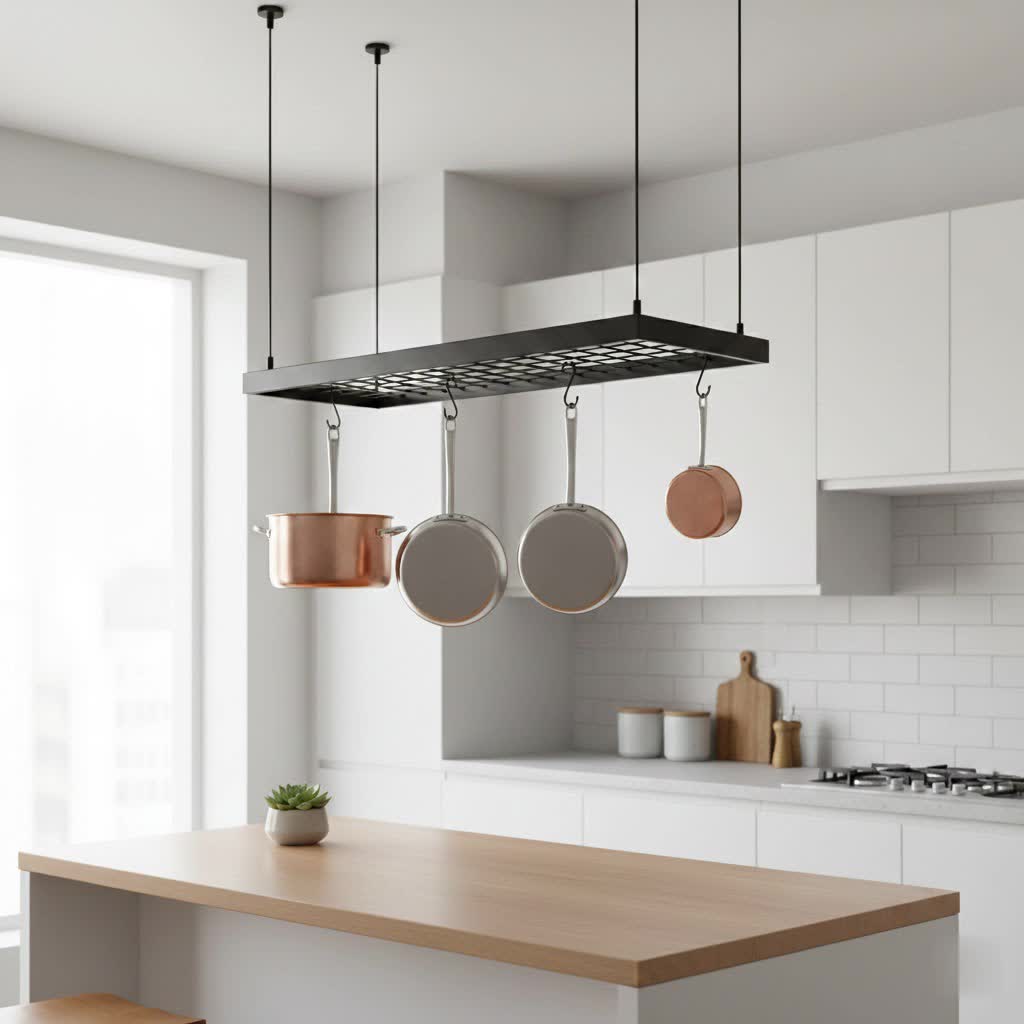
Are your kitchen cabinets overflowing, making it a frustrating game of “Tetris” every time you reach for a pan? Pot racks offer an elegant and practical solution, transforming clutter into a curated display. But with various designs available, how do you choose the perfect one for your culinary haven? The decision often comes down to a fundamental choice: a single bar or a double bar pot rack. Understanding their distinct features, advantages, and limitations is key to selecting the ideal organizer that not only declutters your space but also enhances your cooking experience.
Why Consider a Pot Rack?
Beyond simply getting pots and pans out of your cabinets, a well-chosen pot rack brings a multitude of benefits to any kitchen. They maximize often-underutilized vertical space, instantly freeing up valuable counter and drawer real estate. This improved organization means your essential cookware is always within easy reach, streamlining your cooking process and saving precious time during busy meal preparations. Moreover, pot racks add a unique aesthetic appeal, turning your collection of cookware into a decorative element. By allowing air to circulate around hanging items, they also promote better hygiene and protect your pans from scratches and damage that can occur from stacking.
Understanding Single Bar Pot Racks
Single bar pot racks are characterized by their straightforward design: a single horizontal bar from which hooks are suspended. These racks are typically wall-mounted, offering a sleek, minimalist profile that integrates seamlessly into various kitchen styles. They are often favored for their unobtrusive nature and ability to fit into tighter spaces.
Advantages of Single Bar Pot Racks
- Space-Saving for Minimalists: Their compact design requires minimal wall space, making them ideal for smaller kitchens, galley kitchens, or areas where vertical space is limited. They provide an efficient storage solution without overwhelming the visual flow of the room.
- Sleek Aesthetic: A single bar often presents a cleaner, less imposing look, contributing to a modern or minimalist kitchen design. It allows your cookware to be displayed without the rack itself becoming too dominant.
- Ideal for Smaller Collections: If you have a modest collection of essential pots, pans, and utensils, a single bar rack offers sufficient hanging capacity without being excessive. It encourages thoughtful selection of frequently used items.
- Lighter Visual Impact: For those who prefer an airy, open feel, a single bar rack introduces less visual clutter compared to its double-bar counterpart.
|
Our Picks for the Best Pot rack in 2026
As an Amazon Associate I earn from qualifying purchases.
|
||
| Num | Product | Action |
|---|---|---|
| 1 | VyGrow 28 Inch Pot Rack Wall Mounted, 2 Tier Pots and Pans Organizer with 20 Hooks and 6 Pot Lid Holders, Heavy Duty Steel Pot and Pan Hanger for Kitchen Cookware Utensils Storage 34.7" Lx13 Wx26.4 H |

|
| 2 | HULISEN Pots and Pans Organizer Under Cabinet, Expandable 2-Tier Pots and Pans Lid Storage Rack Holder with 10 Dividers, Adjustable Height Under Sink Organizer, Maximize Kitchen Storage Space |
|
| 3 | ORDORA Pots and Pans Organizer for Cabinet 16.61 Height, 8 Tier Pot Organizers Rack with 3 DIY Methods, Adjustable Pan Organizer under Cabinet Kitchen Organization and Storage |
|
| 4 | ORDORA Pots and Pans Organizer: under Cabinet, 20.8" Height Heavy Duty 120LBS Pots Pans Organizer Rack for under Cabinet 8-Tier Adjustable for Big Stockpots, Dutch Oven, Cast-iron Pans, Heavy Cookware |
|
| 5 | MUDEELA Pots and Pans Organizer Rack for under Cabinet, Expandable 11.81''-22.85'' Pot Lid Kitchen Cabinet Organizer Holder with 10 Adjustable Compartment Cutting Board Organizer for Pan Lid, Bakeware |
|
| 6 | MUDEELA Pots and Pans Organizer Rack under Cabinet 14.55in Height, 8-Tiers Adjustable Pot Rack with 3 DIY Methods, Pot Lid Organizer inside Cabinet for Kitchen Pantry Organization and Storage |
|
| 7 | CHOEZON Pot Racks, 6-Tier Cookware Stand, Triangle Shelf Storage Tower for Kitchen, Pans Pots Storage Rack, Metal Wire Shelf Organizer, Corner Shelf, for Kitchen, Living Room, Black TPR15BB |
|
| 8 | CHOEZON Pots and Pans Organizer Rack, Kitchen Bakers Rack, Multi-Tier Storage Shelf, Kitchen Island Table, Cooking Rack with Pots and Pans Storage, Rustic Brown and Black TPR60BF |
|
| 9 | MUDEELA 8-Tier Pots and Pans Organizer under Cabinet, 15.83" Height Heavy Duty Pot Pan Organizer Kitchen Cabinet Organization and Storage, Adjustable Pot Rack for Frying Pan, Cast Iron Skillet, Black |
|
| 10 | CHOEZON 31.7-Inch Hanging Pot Rack, Space-Saving Pot Hanger for Kitchen, Ceiling Pan Hanging Rack with 16 Detachable S Hooks, Sturdy Metal Frame, Industrial Style, Rustic Brown and Black TPR09BF |
|
Disadvantages of Single Bar Pot Racks
- Limited Capacity: The most significant drawback is their constrained hanging capacity. You can only hang so many items along a single bar, which might not be enough for extensive cookware collections or larger households.
- Less Stability for Heavy Loads: While sturdy for general use, a single bar may offer less inherent stability for exceptionally heavy cast iron pans or a full load of large pots, depending on its mounting and construction.
- Restricted Item Variety: It might be challenging to hang a mix of very large and very small items efficiently on a single line, as larger items can crowd the space.
Understanding Double Bar Pot Racks
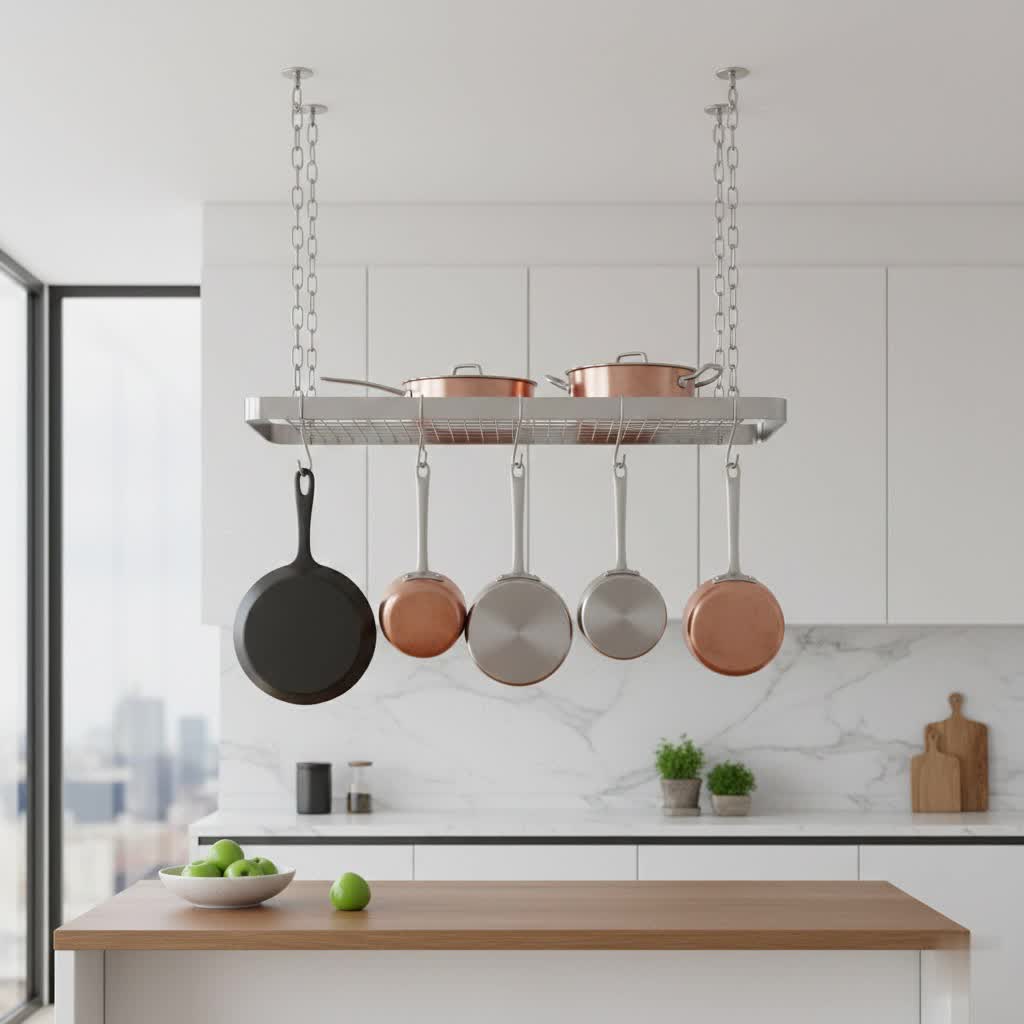
As the name suggests, double bar pot racks feature two parallel bars, significantly increasing their hanging potential. These robust fixtures are designed to accommodate a more substantial collection of cookware and can often handle heavier loads. Double bar racks are available in both wall-mounted and ceiling-mounted configurations, offering versatility for different kitchen layouts.
Advantages of Double Bar Pot Racks
- High Capacity: With two bars, these racks offer substantially more hanging space, allowing you to store a greater number of pots, pans, lids, and kitchen utensils. Many come with ample adjustable hooks, providing flexibility for diverse cookware sizes.
- Enhanced Stability and Robust Support: The dual-bar construction inherently provides greater structural integrity and stability. This makes them exceptionally sturdy, capable of holding heavy items like cast iron cookware without concern.
- Versatility: The increased space and number of hooks allow for more versatile organization. You can easily arrange a mix of large skillets, saucepans, and even smaller tools, customizing the layout to fit your needs.
- Effective Space Utilization: By maximizing vertical storage, double bar racks make excellent use of otherwise unused wall or ceiling space, transforming it into a highly functional storage zone.
- Statement Piece: A substantial double bar pot rack can serve as a striking focal point in a larger kitchen, enhancing its aesthetic appeal and showcasing your impressive cookware collection.
Disadvantages of Double Bar Pot Racks
- Requires More Space: The wider footprint of a double bar rack necessitates more available wall or ceiling space, which might be a challenge in very compact kitchens.
- Potentially Heavier Visual Presence: Due to its larger size, a double bar rack can appear more prominent and potentially visually heavier, which might not suit a kitchen designed for extreme minimalism.
- More Complex Installation: Supporting a greater weight capacity means that installation may require more robust mounting points, such as directly into wall studs or ceiling joists, potentially making the process slightly more involved.
Single Bar vs. Double Bar Pot Racks: A Comparative Overview
To help you make an informed decision, here’s a direct comparison of the key features:
| Feature | Single Bar Pot Rack | Double Bar Pot Rack |
|---|---|---|
| Capacity | Limited, ideal for small to medium collections | High, suitable for extensive cookware collections |
| Stability | Sufficient for lighter to moderately heavy loads | Enhanced, robust support for heavy-duty pots and pans |
| Space Req. | Minimal wall/ceiling space | More significant wall/ceiling space |
| Aesthetics | Sleek, minimalist, less visual impact | Substantial, can be a prominent functional décor element |
| Ideal For | Small kitchens, light cooks, minimalist designs | Large kitchens, avid cooks, diverse/heavy cookware |
| Installation | Generally simpler, less demanding on wall/ceiling | May require more robust mounting for heavier loads |
| Cookware Type | Lighter pots, frequently used utensils | Cast iron, Dutch ovens, large skillets, complete sets |
Choosing Your Ideal Pot Rack: A Buying Guide
Selecting the perfect pot rack involves more than just aesthetics; it’s about harmonizing functionality with your unique kitchen environment. Here’s a guide to help you make the best choice between a single and double bar design:
- Assess Your Cookware Collection: Begin by taking stock of your pots, pans, and utensils. How many do you need to hang? What are their sizes and, importantly, their collective weight? If you primarily use a few lightweight pans, a single bar might suffice. For a sprawling collection of heavy cast iron, a double bar rack is indispensable.
- Evaluate Your Kitchen Space: Measure the available wall length or ceiling area where you intend to install the rack. Consider not just the width but also the depth needed for pots to hang freely without obstructing pathways or cabinets. A single bar fits narrow spaces, while a double bar demands more room. Remember that “large hanging pot racks may be more disruptive in a small kitchen”.
- Consider Your Aesthetic Preferences: Do you lean towards a streamlined, almost invisible storage solution, or do you appreciate your cookware as part of your kitchen’s décor? Single bars offer understated elegance, while double bars make a bolder, more industrial or rustic statement.
- Installation & Weight Capacity: Always check the maximum weight capacity of any pot rack and ensure your wall or ceiling can support it, especially for double bar racks laden with heavy items. Mounting into studs or ceiling joists is crucial for safety.
- Material & Durability: Pot racks come in various materials, including stainless steel, wrought iron, and wood. Stainless steel is a popular choice for its strength and corrosion resistance, especially for double bar designs. Choose a material that complements your kitchen and can withstand the weight and demands of your cookware.
Conclusion
The choice between a single bar and a double bar pot rack boils down to a thoughtful consideration of your kitchen’s size, your cookware collection’s demands, and your personal style. While a single bar rack offers a minimalist, space-saving solution for lighter loads and smaller kitchens, a double bar rack excels in capacity, stability, and versatility, making it ideal for avid cooks with extensive and heavy cookware. By carefully evaluating these factors, you can select a pot rack that not only streamlines your culinary workflow but also adds a touch of functional artistry to your kitchen. Which pot rack design do you envision transforming your kitchen next?
Frequently Asked Questions
Are double bar pot racks always better than single bar ones?
Not necessarily. Double bar racks offer greater capacity and stability, making them excellent for larger, heavier cookware collections. However, for smaller kitchens or minimalist aesthetics, a single bar rack might be a more suitable and less visually intrusive option that still provides essential organization.
Can I install a double bar rack in a small kitchen?
While possible, installing a double bar rack in a very small kitchen might make the space feel overcrowded. It’s crucial to measure carefully and ensure there’s enough room for pots to hang without obstructing movement or creating visual clutter. Single bar wall-mounted racks are often recommended for smaller spaces.
What kind of hooks are best for a pot rack?
Most pot racks come with S-hooks or double-pronged hooks. S-hooks are versatile and easy to adjust. Double-pronged hooks offer extra security and can often hold heavier items more stably. Adjustable hooks are beneficial for customizing spacing to fit various cookware sizes.
How much weight can a pot rack hold?
The weight capacity varies significantly by the rack’s design, material, and how it’s mounted. Single bar racks typically hold less than double bar designs. Always refer to the manufacturer’s specifications and ensure proper installation into wall studs or ceiling joists to safely support the weight of your cookware.