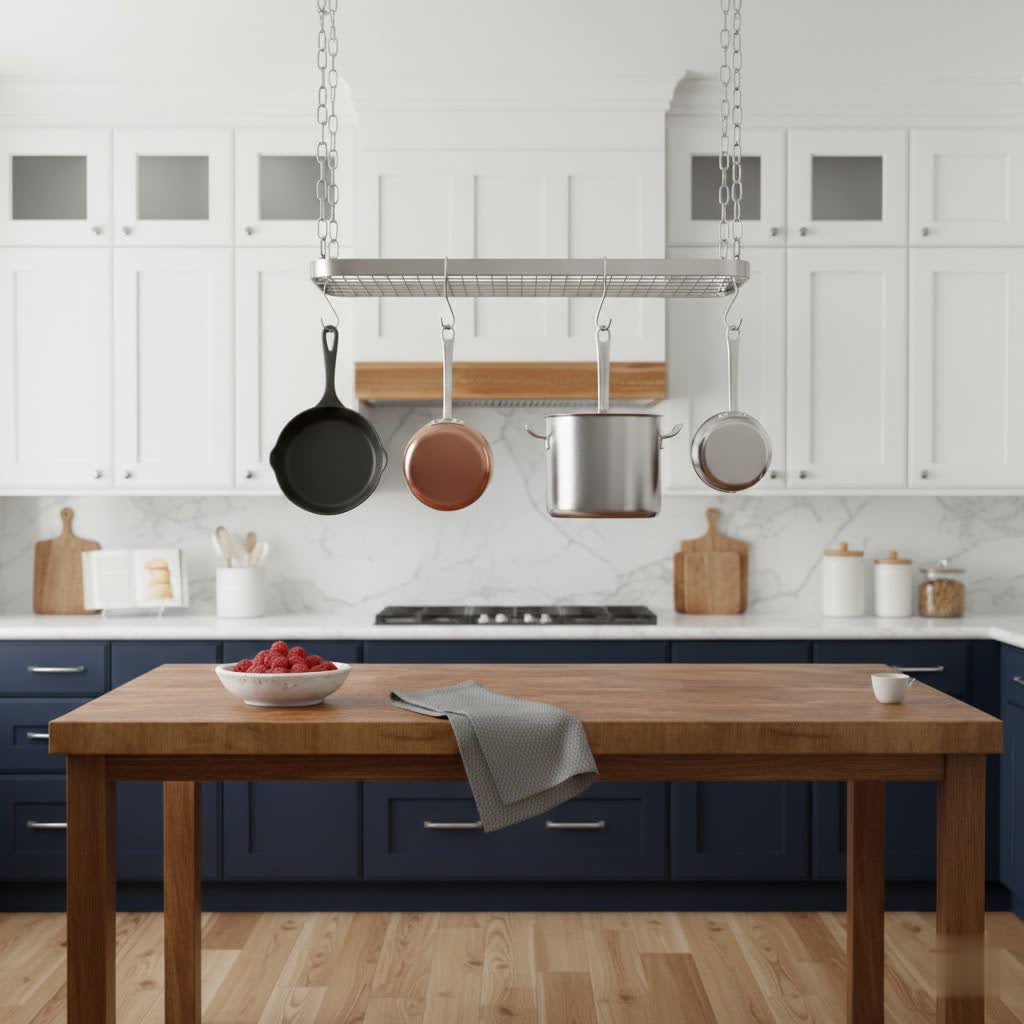
Is your kitchen overflowing with pots, pans, and lids, leaving you searching for extra space and a touch of unique style? You’re not alone. Many home cooks struggle with cluttered cabinets, making meal prep a frustrating ordeal. Imagine transforming that disarray into an organized, visually stunning display that not only frees up valuable real estate but also adds a robust, industrial-chic aesthetic to your culinary haven. Building a DIY industrial pipe pot rack is a remarkably satisfying and practical project, turning a common kitchen challenge into an opportunity for a personalized storage solution. This comprehensive guide will walk you through every step, ensuring you can create a durable, attractive, and functional pot rack that enhances your kitchen’s efficiency and charm.
Why Choose a DIY Industrial Pipe Pot Rack?
|
Our Picks for the Best Pot rack in 2026
As an Amazon Associate I earn from qualifying purchases.
|
||
| Num | Product | Action |
|---|---|---|
| 1 | MUDEELA 8-Tier Pots and Pans Organizer under Cabinet, 15.83" Height Heavy Duty Pot Pan Organizer Kitchen Cabinet Organization and Storage, Adjustable Pot Rack for Frying Pan, Cast Iron Skillet, Black |

|
| 2 | ORDORA Pots and Pans Organizer: under Cabinet, 20.8" Height Heavy Duty 120LBS Pots Pans Organizer Rack for under Cabinet 8-Tier Adjustable for Big Stockpots, Dutch Oven, Cast-iron Pans, Heavy Cookware |
|
| 3 | VyGrow 28 Inch Pot Rack Wall Mounted, 2 Tier Pots and Pans Organizer with 20 Hooks and 6 Pot Lid Holders, Heavy Duty Steel Pot and Pan Hanger for Kitchen Cookware Utensils Storage 34.7" Lx13 Wx26.4 H |
|
| 4 | MUDEELA Pots and Pans Organizer Rack under Cabinet 14.55in Height, 8-Tiers Adjustable Pot Rack with 3 DIY Methods, Pot Lid Organizer inside Cabinet for Kitchen Pantry Organization and Storage |
|
| 5 | ORDORA Pots and Pans Organizer for Cabinet 16.61 Height, 8 Tier Pot Organizers Rack with 3 DIY Methods, Adjustable Pan Organizer under Cabinet Kitchen Organization and Storage |
|
| 6 | CHOEZON 31.7-Inch Hanging Pot Rack, Space-Saving Pot Hanger for Kitchen, Ceiling Pan Hanging Rack with 16 Detachable S Hooks, Sturdy Metal Frame, Industrial Style, Rustic Brown and Black TPR09BF |
|
| 7 | CHOEZON Pot Racks, 6-Tier Cookware Stand, Triangle Shelf Storage Tower for Kitchen, Pans Pots Storage Rack, Metal Wire Shelf Organizer, Corner Shelf, for Kitchen, Living Room, Black TPR15BB |
|
| 8 | CHOEZON Pots and Pans Organizer Rack, Kitchen Bakers Rack, Multi-Tier Storage Shelf, Kitchen Island Table, Cooking Rack with Pots and Pans Storage, Rustic Brown and Black TPR60BF |
|
| 9 | MUDEELA Pots and Pans Organizer Rack for under Cabinet, Expandable 11.81''-22.85'' Pot Lid Kitchen Cabinet Organizer Holder with 10 Adjustable Compartment Cutting Board Organizer for Pan Lid, Bakeware |
|
| 10 | HULISEN Pots and Pans Organizer Under Cabinet, Expandable 2-Tier Pots and Pans Lid Storage Rack Holder with 10 Dividers, Adjustable Height Under Sink Organizer, Maximize Kitchen Storage Space |
|
Opting for a DIY industrial pipe pot rack offers a compelling blend of functionality, aesthetics, and personal satisfaction. First and foremost, it’s a game-changer for kitchen organization, freeing up precious cabinet and counter space by utilizing vertical dimensions. Heavy-duty pots and pans, often cumbersome to store, become easily accessible and beautifully displayed.
Beyond practicality, these racks provide a distinctive aesthetic appeal. The raw, robust nature of industrial pipes brings a rustic, farmhouse, or modern industrial vibe to any kitchen, acting as a striking focal point. As someone with over a decade of experience specializing in kitchen equipment, I’ve seen firsthand how a well-placed pot rack can elevate a kitchen’s character. Moreover, a DIY approach can be significantly more cost-effective than purchasing a pre-made industrial-style rack, allowing you to achieve a high-end look without the hefty price tag. Finally, there’s immense pride in creating something with your own hands, tailoring it precisely to your kitchen’s dimensions and your specific storage needs.
Understanding Industrial Pipes and Fittings
Before diving into construction, it’s essential to familiarize yourself with the basic components of an industrial pipe pot rack. This understanding ensures you select the correct materials for a safe and successful build.
The most common material choices for these projects are black iron pipe and galvanized steel pipe. Black iron pipe offers a classic, dark, untreated industrial look and is often preferred for its aesthetic. Galvanized steel pipe, treated with a zinc coating, is more resistant to rust and corrosion, making it a durable option for humid kitchen environments, though its silver finish differs visually. Both typically come in standard diameters, with 1/2-inch and 3/4-inch being the most common for pot racks, offering a good balance of strength and visual scale.
Key fittings you’ll encounter include:
- Floor Flanges: Round bases used to attach pipes securely to flat surfaces like ceilings or walls.
- Elbows (90-degree): Used to create turns in the pipe structure.
- 3-Way Side Outlet Elbows: Essential for creating corners with three connecting pipe sections, often used for the main frame of a hanging rack.
- Tees: Allow three pipes to connect in a ‘T’ shape.
- Pipe Nipples: Short lengths of pipe, threaded on both ends, used to connect fittings. They come in various standard lengths (e.g., 6-inch, 8-inch, 12-inch, 30-inch).
- Pipe Unions: Two-part fittings that allow you to connect two pipes without needing to rotate one of them, simplifying assembly, especially for larger structures.
When you purchase industrial pipes and fittings, especially black iron, they often come with a protective oily residue from the manufacturing process. It’s crucial to clean all metal pieces thoroughly with an all-purpose cleaner or degreaser before assembly and certainly before any painting. Allowing them to air dry completely or wiping them dry immediately prevents rust. For an even more consistent finish and added rust protection in a busy kitchen, you might consider spray painting all pieces with a metal-specific paint after cleaning.
Tools and Materials You’ll Need
Gathering all your supplies beforehand will make the DIY process smooth and efficient. Here’s a comprehensive list:
Essential Tools:
- Stud Finder: Absolutely critical for locating ceiling joists or wall studs, ensuring your pot rack is securely anchored.
- Power Drill: For pre-drilling pilot holes and driving screws.
- Drill Bits: Assorted sizes suitable for pilot holes and mounting hardware.
- Pipe Wrenches (x2): Needed to tighten pipe connections securely.
- Level: To ensure your pot rack hangs perfectly straight.
- Tape Measure: For accurate measurements of your space and pipe placement.
- Pencil: For marking drill points and measurements.
- Safety Glasses and Work Gloves: Essential for personal protection.
- All-Purpose Cleaner or Degreaser: For cleaning pipe residue.
- Old Rags: For cleaning and applying lubricants if needed.
- Spray Paint (Optional): Matte black or metallic finish for a consistent look and rust prevention.
Materials (for a common ceiling-mounted design, approx. 30″ L x 16″ W x 6″ T):
- 4 x 1/2-inch x 6-inch Black Steel Pipe: Forms the vertical supports.
- 2 x 1/2-inch x 30-inch Black Steel Pipe: Forms the main horizontal hanging bars.
- 4 x 1/2-inch Black Steel Pipe Nipple (8-inch): Used for connecting unions and elbows. (Some designs might use 8-inch for vertical support instead of 6-inch, adjust based on desired height).
- 2 x 1/2-inch Black Iron Pipe Union: Connects the two halves of your rack for easier assembly.
- 4 x 1/2-inch Black Iron Floor Flange: For attaching the rack to the ceiling.
- 4 x 1/2-inch 3-Way Black Iron 90-Degree Side Outlet Elbow: Crucial for creating the corners of your rectangular frame.
- 10-12 x S-Hooks: For hanging pots, pans, and utensils.
- Heavy-Duty Wood Screws: Long enough to penetrate through drywall/plaster and securely into ceiling joists (e.g., 2.5-inch to 3-inch, depending on ceiling thickness).
- Toggle Bolts/Heavy-Duty Drywall Anchors (Optional): Only if ceiling joists are inaccessible and the load is light, use with extreme caution.
- WD-40 or similar lubricant: Helps with pipe threading if connections are stiff.
“When it comes to DIY projects involving heavy items like pot racks, never compromise on the quality of your fasteners. A cheap screw or inadequate anchor can lead to a dangerous failure. Always invest in heavy-duty hardware designed for the load.” – Admin, ReviewHubN.com, Kitchen Equipment Specialist
Step-by-Step Guide: Building Your Industrial Pipe Pot Rack (Ceiling Mounted)
This guide focuses on creating a popular rectangular, ceiling-mounted industrial pipe pot rack that maximizes storage and visual appeal.
-
Prepare Your Materials:
Begin by cleaning all your pipes and fittings thoroughly with an all-purpose cleaner or degreaser to remove any manufacturing oils. This step is crucial for both aesthetics and preventing rust. Wipe them completely dry. If you plan to paint your rack, do so now, ensuring even coats and adequate drying time. Applying a thin layer of WD-40 to the pipe threads can also ease assembly. -
Assemble the Base Frame Sections:
Take two of your 6-inch pipes and attach one to each of two 3-way side outlet elbows. Ensure these connections are hand-tight, then use pipe wrenches to snug them up, making sure the outlets of the elbows are aligned as desired (e.g., facing opposite directions to form a corner). Repeat this process for the remaining two 6-inch pipes and two 3-way elbows. You should now have two identical “L-shaped” pipe assemblies. -
Incorporate the Unions:
Now, take two of the 8-inch pipe nipples. Attach one half of a pipe union to one end of each 8-inch nipple. The unions typically come in two parts that thread together; you only need to use one half for now. These will serve as a point where you can easily connect the two larger sections of your rack later. -
Complete the Outer Frame with Longer Pipes:
Connect the other end of the 8-inch pipe nipples (the side without the union half) into the third opening of the 3-way side outlet elbows from Step 2. Then, attach a 30-inch pipe to the remaining open end of each 3-way elbow. Repeat this for both of your “L-shaped” assemblies. You should now have two long, parallel sections, each resembling an “L” with an attached 8-inch pipe and a 30-inch pipe. -
Attach the Floor Flanges:
Screw a floor flange onto the open end of each of the four 6-inch pipes. These flanges will be the points where your rack attaches to the ceiling. Ensure they are tightened securely. -
Join the Two Rack Halves:
This is where the pipe unions come into play. Bring your two partially assembled rack sections together. The remaining halves of the pipe unions should now align. Carefully thread the two union halves together to connect your entire frame. This creates a complete rectangular or square structure. Use pipe wrenches to fully tighten all connections, ensuring the entire structure is rigid and stable. Double-check that all flanges are oriented correctly for ceiling mounting. -
Attach S-Hooks:
Distribute your S-hooks along the 30-inch horizontal pipes. You can add as many as needed to hang your pots and pans. Some S-hooks might need slight bending to fit snugly around the pipe and prevent them from falling off when a pot is removed.
Mounting Your Industrial Pipe Pot Rack Safely
Proper installation is paramount to prevent your heavy pot rack and cookware from falling. This is where your expertise as an Admin for reviewhubn.com comes into play.
-
Locate Ceiling Joists:
This is the most critical step. Your pot rack, especially when loaded with cookware, will be heavy. Drywall or plaster alone cannot support this weight. You must attach your pot rack directly into ceiling joists (the wooden framing members above your ceiling). Use a reliable stud finder to locate at least two parallel joists in your desired hanging area. Mark their exact centers with a pencil. -
Mark Placement on the Ceiling:
Hold your assembled pot rack up to the ceiling in the desired location. Use a level to ensure it’s straight. With a pencil, mark through the screw holes of each floor flange onto the ceiling. Double-check that all marks align with the center of your ceiling joists. If your rack’s dimensions don’t perfectly match joist spacing (typically 16 or 24 inches on center), you may need to adjust your rack design or consider installing blocking between joists in the attic for secure attachment points. -
Pre-Drill Pilot Holes:
Using your power drill and a drill bit slightly smaller than the diameter of your mounting screws, pre-drill pilot holes at each marked location on the ceiling. This prevents wood splitting and makes driving screws easier. -
Secure with Hardware:
Carefully lift your pot rack into place. Align the holes in the floor flanges with your pre-drilled pilot holes. Drive heavy-duty wood screws through the flanges and securely into the ceiling joists. Tighten all screws firmly, ensuring the rack is flush and immoveable.Self-Correction and Caution: If, despite your best efforts, joists are not accessible where you absolutely need to hang a lighter pot rack, you might consider heavy-duty toggle bolts or specialized ceiling anchors. However, as an expert, I must stress that this significantly reduces the weight capacity compared to direct joist mounting. For heavy loads, always aim for joists. If you need to hang something heavy in a very specific spot where a joist isn’t present, consider adding blocking from above in the attic, or cutting open the drywall to install it from below.
-
Verify Stability:
Once mounted, give the empty pot rack a firm but gentle tug to test its stability. It should feel rock-solid with no discernible movement. Only then should you begin hanging your pots and pans. Distribute the weight as evenly as possible to minimize stress on any single point.
Cost Breakdown: DIY vs. Store-Bought
One of the significant advantages of building your own industrial pipe pot rack is the potential for cost savings.
A typical DIY industrial pipe pot rack, using the materials outlined above for a ceiling-mounted design, can cost under $120 for the raw materials. This estimate often includes the pipes, fittings, S-hooks, and basic mounting hardware. Prices can vary based on pipe diameter, length, and where you purchase your components (local hardware store vs. online).
In contrast, store-bought industrial-style pot racks can range from $150 for smaller, simpler designs to well over $400 for larger, more elaborate units with integrated shelving or specialized finishes. While these offer convenience, they often lack the customizable dimensions and the personal touch of a handmade piece. The DIY route not only saves money but also ensures a perfect fit for your unique kitchen space.
Maintenance Tips for Your Pipe Pot Rack
To keep your industrial pipe pot rack looking its best and functioning flawlessly for years to come, a little maintenance goes a long way.
- Regular Cleaning: Over time, kitchen grease and dust can accumulate on your pipes. Wipe down the pipes and fittings regularly with a damp cloth and mild dish soap to keep them clean. Dry immediately to prevent water spots or rust, especially if you used black iron pipes that weren’t sealed or painted.
- Checking Connections: Periodically inspect all pipe connections and mounting screws. The constant vibration from hanging and removing pots can sometimes loosen fittings. Use your pipe wrenches to re-tighten any loose connections and ensure all ceiling screws are secure.
- Rust Prevention: If you opted for black iron pipes and haven’t painted or sealed them, consider applying a thin coat of clear protective sealant or even a touch of furniture wax periodically. This creates a barrier against moisture and helps prevent rust, maintaining the authentic industrial look.
- Even Weight Distribution: Always try to distribute the weight of your pots and pans evenly across the rack. This reduces stress on the mounting points and the overall structure, prolonging its lifespan.
Conclusion
Building your own industrial pipe pot rack is a rewarding endeavor that tackles kitchen clutter with both style and practicality. From selecting the rugged black iron pipes and essential fittings to carefully mounting your creation into ceiling joists, each step brings you closer to a more organized and aesthetically pleasing kitchen. This project not only provides a heavy-duty, customized storage solution but also infuses your space with a unique industrial charm that reflects your personal touch.
Are you ready to transform your kitchen from chaotic to captivating with a DIY pot rack that truly stands out?